
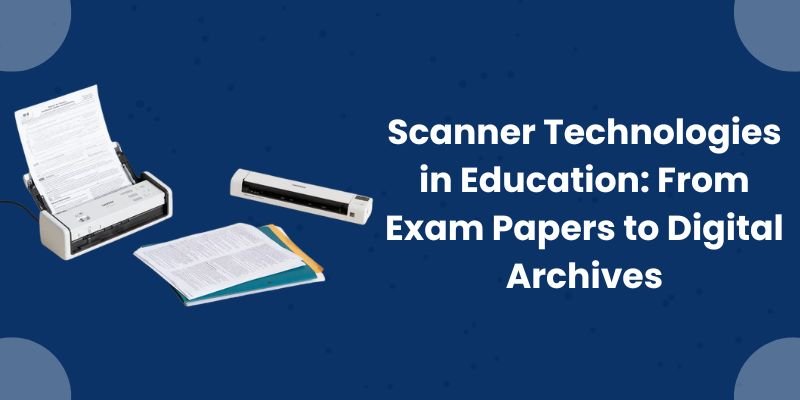
In an era dominated by digital transformation, the education sector is undergoing a significant overhaul in how it manages and stores information. One of the unsung heroes in this shift is scanner technology. From converting handwritten exam sheets to digital records, to preserving historical academic documents in digital archives, scanners have become indispensable in modern educational institutions.
This blog delves into the role of scanner technologies in education, their evolving use cases, the benefits of digitization, and how educational technology providers like VAPS are facilitating this transformation.
The Evolution of Scanner Technology in Education
From Photocopiers to High-Speed Document Scanners
Initially, schools and colleges relied heavily on photocopiers to duplicate exam papers, handouts, and records. As demands increased, the limitations of photocopying became evident. Modern institutions now use high-speed document scanners to digitize large volumes of documents efficiently, converting paper-based data into secure digital formats.

The Rise of Optical Character Recognition (OCR)
Scanner technology advanced with the integration of OCR (Optical Character Recognition), which allows scanned documents to be transformed into editable and searchable digital text. This innovation has enabled more intelligent document handling, reducing time spent on manual data entry and improving accessibility.
Combined with AI, OCR is now capable of recognizing handwritten content with remarkable accuracy, making it a vital tool for processing exam sheets, application forms, and handwritten notes.
Use Cases of Scanner Technology in Education
1. Exam Paper Digitization
Educational institutions use scanners to digitize handwritten exam sheets. These scanned papers can be stored securely, reviewed by multiple assessors remotely, and even graded using AI-powered systems. This improves transparency, ensures record availability, and accelerates the evaluation process.
2. Student Record Management
Admissions documents, transfer certificates, identity proofs, and mark sheets can all be scanned and archived. This reduces physical storage requirements and ensures that records are never lost or damaged. Institutions using platforms like VAPS ERP have digitized entire admission cycles to minimize paperwork.
3. Digital Archiving
Historical records such as institutional minutes, academic research, and alumni achievements can be digitized and stored in secure, cloud-based archives. This facilitates both preservation and easy retrieval, enabling researchers and administrators to access decades-old documents within seconds.
4. Library Digitization
Libraries are digitizing thousands of books, journals, and manuscripts using high-resolution flatbed and book scanners. This supports remote learning and protects rare collections from physical wear and tear, while making them more widely accessible to students and researchers.
5. Automation in Administrative Processes
Scanned documents integrated with ERP or SIS systems enable automated workflows, such as application processing, ID card generation, and internal approvals. VAPS integrates these systems under a single digital umbrella, ensuring seamless coordination across departments.
Benefits of Scanner Technologies in Academic Environments
Improved Efficiency
Scanning reduces the time spent handling paper, filing, and locating documents. Automated workflows improve administrative efficiency and staff productivity. Institutions report significant time savings by digitizing exam processing and record management.
Better Accessibility
Digital records are easily searchable, retrievable, and shareable across departments. Students and faculty can access needed documents anytime, anywhere. This is especially beneficial for hybrid and online education models.
Enhanced Data Security
Physical documents are prone to damage, theft, or loss. Digitized documents can be encrypted, access-controlled, and backed up for maximum security. Scanner systems combined with platforms like VAPS offer granular access control and audit trails for compliance.
Cost Savings
Reducing paper use, physical storage needs, and administrative labor results in significant cost savings for institutions. Over time, the ROI from digitization outweighs initial setup costs.
Eco-Friendly Practices
Digitization supports green initiatives by cutting down on paper consumption and reducing the carbon footprint. Schools embracing digital records contribute to sustainability and environmental goals.
VAPS: Leading the Way in Scanner Integration
VAPS Digital Campus Suite incorporates robust document management solutions that seamlessly integrate scanner technologies into everyday campus workflows. Whether it’s for exam digitization, automated admissions processing, or historical archiving, VAPS ensures that scanned documents are intelligently processed and stored.
With AI-based OCR, cloud integration, and real-time syncing, VAPS enables:
- Fast and accurate scanning of academic documents
- Secure storage with role-based access control
- Real-time integration with ERP, SIS, and LMS platforms

Educational institutions using VAPS have reported:
- Faster turnaround times in result processing
- Reduced administrative overhead
- Improved compliance with regulatory standards
- Enhanced student experience through digital services
Implementation Challenges and Solutions
Resistance to Change
Many institutions are slow to adopt scanner technologies due to legacy systems or resistance from staff. Proper training, change management programs, and demonstration of long-term benefits can help overcome this inertia.

Budget Constraints
While there is an initial investment, the ROI from digitization is high. Institutions can start with pilot programs in key departments to validate cost-effectiveness. VAPS offers scalable solutions for institutions of all sizes.
Integration Complexities
Not all scanners integrate seamlessly with campus software. VAPS addresses this by offering customizable APIs and support for multi-vendor hardware. It ensures that institutions don’t face vendor lock-in and have the freedom to scale.
Data Privacy Regulations
Complying with data protection regulations like GDPR or FERPA can be complex. VAPS solutions are designed with compliance in mind, featuring encryption, access logs, and secure data handling protocols.
The Future of Scanner Technology in Education
AI-Driven Document Classification
Scanners integrated with AI will not only scan but also classify and tag documents based on content, improving organization and searchability. Smart categorization helps administrative teams quickly retrieve documents.
Voice and Gesture-Based Scanning
Touchless scanning systems using voice commands or gestures will improve hygiene and accessibility, especially in shared environments like libraries and labs.
Blockchain for Document Authentication
Scanned academic documents can be cryptographically signed and stored on the blockchain for tamper-proof verification. Institutions can issue digital diplomas that are instantly verifiable worldwide.
Mobile Scanning Applications
Smartphones will increasingly be used as mobile scanners for students to submit assignments, certificates, or forms directly to the institution’s database. VAPS is exploring mobile integrations to expand accessibility.
Real-Time Analytics
Advanced scanner systems will provide real-time analytics about document volumes, processing time, and error rates—helping institutions optimize workflows and identify bottlenecks.
Scanner technologies have moved beyond being simple input devices. Today, they are key components of smart, efficient, and secure educational ecosystems. With advanced OCR, integration capabilities, and intelligent software like VAPS Digital Campus, institutions are digitizing not just paper but the entire academic experience.
By embracing scanning solutions, schools and colleges can ensure better data management, faster operations, and future-ready infrastructure – all while saving time, money, and trees. As we continue to move toward paperless campuses, scanner technology will remain a cornerstone of digital transformation in education.
